Daily math fluency, K to Algebra 1
About 30 minutes a day.
One small step at a time.
Math Ladder is a printable practice program that builds fast, accurate math facts and skills. Students climb 22 stages in 199 small steps. Each day's session is a new sheet plus extra practice, and a timed checkpoint tells you when they are ready for the next step.
No account needed for Stage 3 sheets. Every sheet comes with its own answer key.
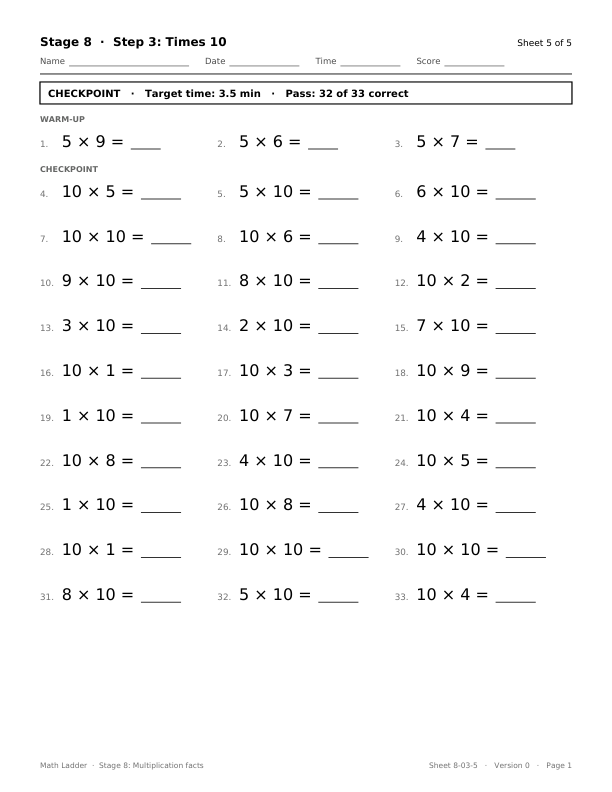
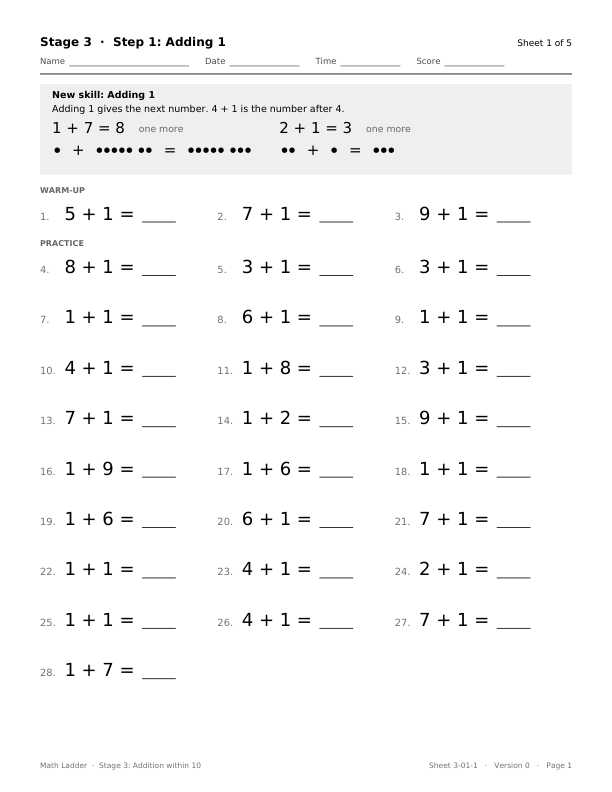
How a day looks
Print today's session
Today's sheet, then extra practice from sheets already learned. About 30 minutes, or 15 in the first stages for the youngest learners.
Check it together
Mark it with the answer key. The student fixes every mistake before the sheet counts as done.
Checkpoint on day 5
Each step takes five sessions, and day 5 starts with a timed checkpoint. Pass it and move up. If not, Math Ladder tells you exactly what to repeat.
Small steps
Each skill is split into steps narrow enough that a student can master one in a week. Adding 1 comes before adding 2. Doubles come before near doubles.
Mastery, not mileage
Students move on when they are accurate and fast, not when the calendar says so. Right but slow means the skill is not automatic yet, so the checkpoint looks at both.
A fresh version every time
Need to repeat a step? Math Ladder makes a new version of the same sheet that your student has never seen, so they practice the skill rather than memorize the page.
Built for parents and teachers
Add each student once. Their name prints on every sheet, their progress is saved, and the next sheet is always one click away.
Every answer checked
Every problem on every sheet is checked by a separate verifier before it can be printed, and a version that fails is never served.
Private by design
Accounts are for adults only. We store a first name and an optional grade for each student, no ads and no tracking.
Not sure where to start?
The ladder runs from counting to 10 up to quadratics. Each stage has a free placement check, so a student who already knows a stage can skip it in one sitting.